Focus
Live lunar position · September 14, 2026 · 12:00 UTC
Tonight’s Moon is a Waxing Crescent.
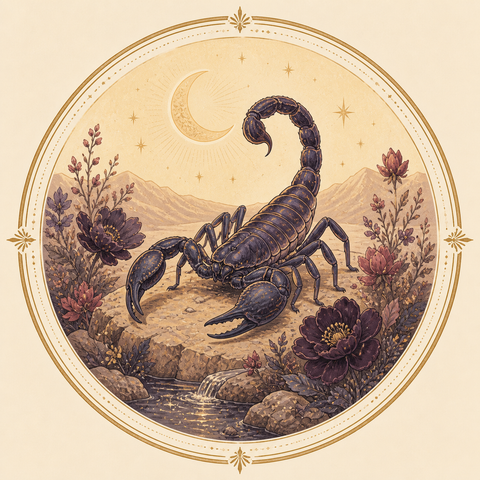
On September 14, 2026, the Moon is a waxing crescent in Scorpio, 12% illuminated at the noon UTC sample. The next principal phase is the First Quarter on September 18, 2026 at 20:43 UTC. The phase is calculated from the measured angle between the Sun and Moon; the meaning read into it belongs to astrological tradition.
- Illumination
- 12% Light increasing
- Moon sign
- Scorpio 2.79° in sign
- Lunar age
- 3.4 days Since New Moon
41.10° from the Sun
Waxing Crescent
The symbolic layer
Give the idea a first shape
The light is increasing but the cycle is still young. Symbolically, this phase favors early experiments, information gathering, and visible first steps.
What is measured: position, angle, illumination, and time. What is interpretive: the reflection prompt below.
Keep perspective
Early uncertainty is not evidence that the direction is wrong.
The 29.53-day rhythm
Where you are in the lunar cycle
The four principal phases are precise geometric crossings. The Moon’s changing shape between them is continuous—not four separate switches.
New Moon
♍ Virgo
First Quarter
♐ Sagittarius
Full Moon
♈ Aries
Last Quarter
♋ Cancer
New Moon
♎ Libra
Moon sign
Scorpio at 2.79°
The sign is the 30-degree tropical zodiac sector containing the Moon at the noon UTC sample. Because the Moon moves quickly, your local-day position may change around an ingress.
- Next ingress
- ♐ Sagittarius September 16, 2026 · 16:41 UTC
Planetary motion
4 planets retrograde
- SaturnStructure, duty, and long-term limits
- UranusChange, independence, and disruption
- NeptuneImagination, ideals, and uncertainty
- PlutoPower, endings, and deep revision
Transparent method
Calculated here, not copied from a calendar.
The server calculates apparent geocentric tropical longitude for the Sun and Moon at 12:00 UTC. Illumination comes from their angular separation. Principal phase times are refined from six-hour samples to the minute; Moon sign ingress is refined from hourly samples.
UTC gives every reader one checkable timestamp. The phase instant is worldwide, but its calendar date can differ by time zone. For the complete daily sequence, use the Moon phase calendar; for every planetary position, open today’s sky.

Make it personal
The Moon is shared. The house it crosses in your chart is yours.
A public lunar calendar describes one sky for everyone. Your birth chart shows where today’s Moon lands in your own pattern.
Clear answers
Frequently asked questions
What is the Moon phase today?
On September 14, 2026, the Moon is a waxing crescent, 12% illuminated at 12:00 UTC. Its geocentric elongation from the Sun is 41.1 degrees. The illumination and phase are calculated from that measured angle rather than selected from a written calendar.
What zodiac sign is the Moon in today?
The Moon is in Scorpio at 2.79 degrees within the sign at the noon UTC sample. It next enters Sagittarius on September 16, 2026 at approximately 16:41 UTC. The zodiac sign is an astrological coordinate; its reflective meaning is interpretive rather than a scientific forecast.
When is the next major Moon phase?
The next principal Moon phase is the First Quarter in Sagittarius on September 18, 2026 at approximately 20:43 UTC. Principal phases occur when Sun–Moon elongation crosses 0, 90, 180, or 270 degrees.
How old is the Moon today?
The current lunar age is approximately 3.4 days since the most recent calculated New Moon. One synodic lunar cycle averages about 29.53 days, so lunar age and calendar date do not advance in a fixed monthly pattern.
How does MyMysticDay calculate the Moon phase?
The server calculates apparent geocentric tropical longitude for the Sun and Moon from the astronomical series described on the methodology page. Illumination comes from the Sun–Moon angle. Exact principal phase times are found by scanning the angle and refining each crossing, not by importing a third-party phase calendar.
Does the Moon phase predict what will happen?
No. The Moon’s longitude, elongation, illumination, and principal phase time are astronomical calculations. Meanings such as beginning, culmination, or release belong to astrological tradition and are offered as prompts for reflection. They do not guarantee events or replace medical, legal, financial, safety, or mental-health advice.