Skip to content

Ephemeris · noon UTC

The sky on
June 5, 2026

In one paragraph

On June 5, 2026 the Moon is in Aquarius at 11°11' Aquarius and the Sun is in Gemini at 14°51' Gemini. The lunar phase is a waning gibbous, 78 per cent illuminated. Pluto is retrograde on June 5, 2026. MyMysticDay computes these positions on its own servers for noon UTC using the lunar and solar series from Jean Meeus’s Astronomical Algorithms and NASA JPL Keplerian elements for the planets, rather than reading them from a third-party ephemeris.

Moon
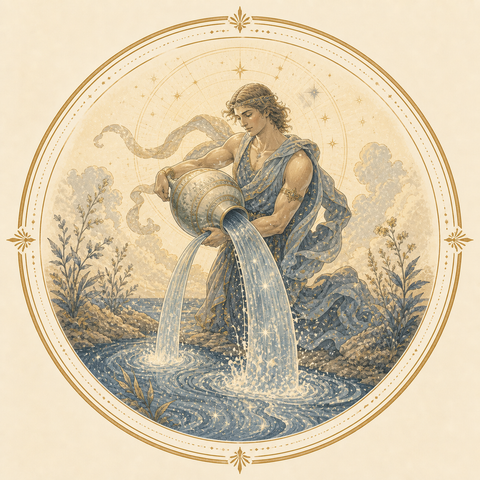
Aquarius

11°11' Aquarius

Phase
Waning gibbous

78% illuminated

Sun
Gemini

14°51' Gemini

Retrograde
1

Pluto

Positions

Every body, to the minute

Ecliptic longitude for noon UTC on June 5, 2026, computed on this site rather than requested from an ephemeris service.

Planetary positions for June 5, 2026, 12:00 UTC. Degrees are given within the sign, in the conventional degree-and-minute notation.
Body Sign Degree Motion
Sun Gemini 14°51' Direct
Moon Aquarius 11°11' Direct
Mercury Cancer 6°25' Direct
Venus Cancer 20°42' Direct
Mars Taurus 13°05' Direct
Jupiter Cancer 24°57' Direct
Saturn Aries 12°41' Direct
Uranus Gemini 2°20' Direct
Neptune Aries 4°08' Direct
Pluto Aquarius 5°18' Retrograde ℞
North Node Pisces 3°56' Direct

The Moon

Aquarius, 78% lit

The Moon is the fastest body in any chart — roughly half a degree an hour, and two to three days in a sign. It is the reason two consecutive days feel different from one another at all, and the one position on this page that changes materially between morning and evening.

Leaves Aquarius June 7, 01:00 UTC

Elongation from the Sun 236.33°

Retrogrades

1 planet retrograde

Pluto is retrograde on June 5, 2026.

A retrograde planet is not reversing. It appears to move backward from Earth because the two orbits are passing each other, the way a slower train appears to slide backward from a faster one. MyMysticDay determines it by comparing a planet’s longitude a short interval apart, so a station is dated to the day it happens rather than read from a table.

  • Pluto in Aquarius

Aspects between the moving bodies

The shape of the day, before anybody’s chart

Angles the planets are making to each other on June 5, within half the orb a natal chart would allow — tight enough to be news about a particular day. These are the same for everyone; what differs is which of your own degrees they land on.

  • Neptune sextile Pluto 1°10'
  • Moon sextile Saturn 1°30'
  • Uranus sextile Neptune 1°48'
  • Moon square Mars 1°54'
  • Sun sextile Saturn 2°10'
  • Mercury square Neptune 2°17'
  • Uranus trine Pluto 2°58'
  • Sun trine Moon 3°40'

The part that is about you

This sky is the same for everyone. Your chart is not.

Every figure on this page applies to all eight billion of us equally. What makes a day yours is which of these degrees is standing on one of your own — and that takes your birth chart, not your sun sign. The daily reading is free and needs no account.

Method

Where these numbers come from

Solar and lunar longitudes follow the standard series published in Jean Meeus’s Astronomical Algorithms; the planets follow NASA JPL’s Keplerian elements with their secular rates, solved for eccentric anomaly and projected onto the ecliptic. Retrograde motion is determined by comparing longitudes a short interval apart rather than assumed from a table. Every figure on this page was computed by this application — no part of it is requested from a third-party ephemeris.

Positions are given for 12:00 UTC. A date is a whole day and the bodies move through it, so noon is the midpoint: the positions shown are the ones true for the largest part of the day across the largest number of time zones. Only the Moon moves fast enough for the choice to change the figure materially.

The full specification — the house system, the aspect orbs, the tolerances the engine is tested against on every deploy — is published on the methodology page. Astrological interpretation elsewhere on this site is presented as a reflective framework rather than as fact; the astronomy on this page is simply arithmetic, and it can be checked against any published ephemeris.

Clear answers

Frequently asked questions

What planets are retrograde on June 5, 2026?
Pluto is retrograde on June 5, 2026. A planet is retrograde when it appears from Earth to move backward through the zodiac. Nothing physically reverses; the appearance comes from the two orbits passing each other. MyMysticDay determines retrograde motion by comparing a planet’s longitude a short interval apart rather than reading it from a fixed table, so a station shows up on the day it actually happens.
What sign is the Moon in on June 5, 2026?
The Moon is in Aquarius at 11°11' Aquarius on June 5, 2026. It leaves Aquarius at approximately 01:00 UTC on June 7. The Moon spends between two and three days in each sign and is the fastest-moving body in a chart, which is why consecutive days differ from each other at all.
What is the Moon phase on June 5, 2026?
The Moon is a waning gibbous on June 5, 2026, approximately 78 per cent illuminated, at an elongation of 236.33 degrees from the Sun. The phase is derived from the angle between the Sun and the Moon rather than looked up, so it is consistent with every other figure on this page.
Where is the Sun on June 5, 2026?
The Sun is in Gemini at 14°51' Gemini on June 5, 2026. That degree is what a sun-sign horoscope is based on, and it is one of roughly ten placements in a full birth chart.
How are these planetary positions calculated?
On MyMysticDay’s own servers, for noon UTC on the date shown. Solar and lunar positions follow the standard series published in Jean Meeus’s Astronomical Algorithms; planetary positions follow NASA JPL’s Keplerian elements with their secular rates. Nothing is requested from a third-party ephemeris service, and the method, tolerances and test values are published on the methodology page.
Why noon UTC and not midnight?
A date is a whole day and the planets move through it. Noon is the midpoint, so the positions shown are the ones true for the largest part of the day across the largest number of time zones. Midnight UTC would describe a moment most of the world has either not reached yet or already left. The Moon moves about half a degree an hour, so it is the only body for which the choice materially changes the figure.