
- Arcana
- Minor
- Suit
- Wands
- Element
- Fire
- Attribution
- The root of Fire
- Yes or no
- YES
Tarot card meaning
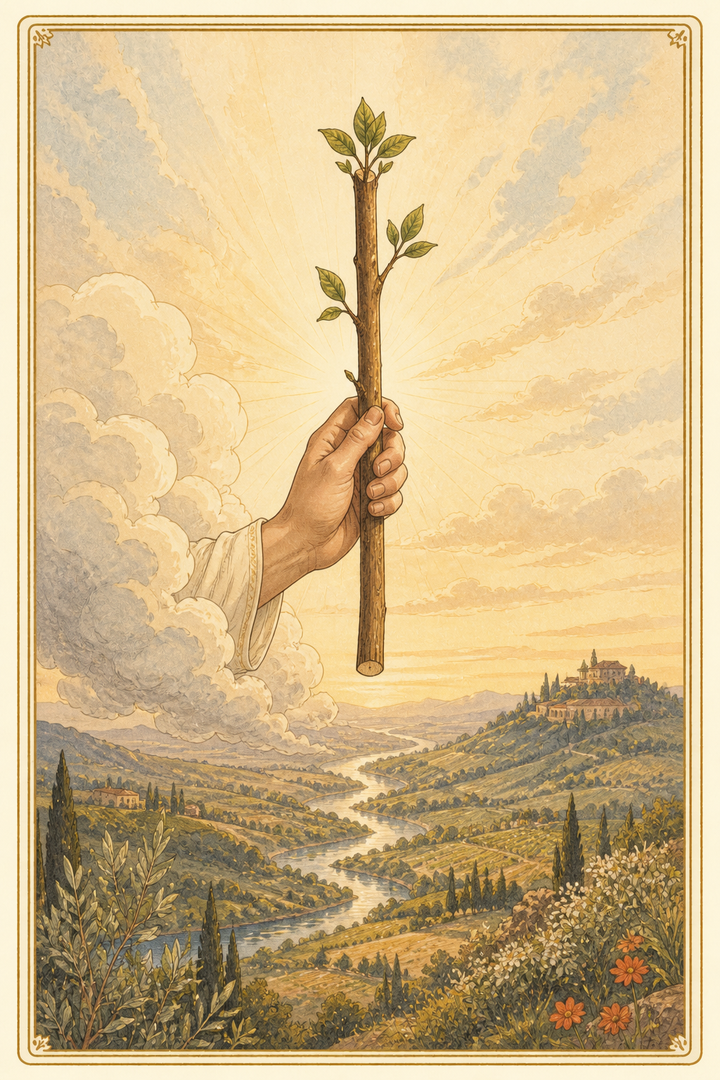
Ace of Wands
A fresh opening in motivation, creativity, and purposeful action.
 Written byEmily ParkerAstrology & Tarot Writer
Editorial review byMyMysticDay Editorial TeamEditorial standards reviewer
Written byEmily ParkerAstrology & Tarot Writer
Editorial review byMyMysticDay Editorial TeamEditorial standards reviewer
In one paragraph
Ace of Wands belongs to the suit of Wands in the Minor Arcana, attributed to the root of Fire in the Golden Dawn scheme the Waite-Smith deck follows. Upright it points to a fresh opening in motivation, creativity, and purposeful action. Reversed, the meaning is not inverted — it is blocked, delayed, turned inward or overextended, depending on where the card sits in its suit. The card describes what is in front of you; what you do about it stays yours.
What does Ace of Wands mean upright?
Upright, Ace of Wands holds a fresh opening in motivation, creativity, and purposeful action — a promising beginning that needs a conscious first step. Ace of Wands is not a decan but the root of Fire itself — the whole element offered before any of it has been spent on something in particular.
What does Ace of Wands mean reversed?
Reversed, Ace of Wands reads as blocked or excessive energy. An Ace reversed is almost always potential that has not been taken up: the offer is real and nothing has been done with it.
Ace of Wands is the root of Fire
An Ace is not a decan. In the Golden Dawn scheme it is the root of its element — Fire itself, before it has been divided into ten degrees of anything or given to a planet to rule.
That is why an Ace reads as potential rather than as an event. Fire acts first and understands afterwards, and the Ace of Wands is that quality offered whole and not yet spent on anything in particular.
The root of Wands
Every suit runs the same arc from Ace to Ten, and the first position is the root: the element offered whole and unspent — everything the suit can do, before any of it has been committed to a particular use.
Fire acts first and understands afterwards, so in Wands that position plays out in will, motivation and what you are moving toward. Potential is not an achievement. An Ace can sit unopened for years and still feel, to the person holding it, like something already done.
The question underneath it: What would it cost to actually begin this, rather than to keep having it available?
What reversal actually does here
A reversed card is not the opposite of the upright one. That is the most common misunderstanding in the deck, and it produces readings in which every second card contradicts the one before it. A reversal blocks, delays, turns inward, or overextends — and which of those it is depends on what kind of card is upside down.
An Ace reversed is most often potential that has not been taken up — the offer is real and nothing has been done with it. It rarely means the opening is gone; it means it is still sitting there.
If you read without reversals at all, nothing is lost. Plenty of experienced readers do, and take the same information from the cards surrounding a difficult one instead. What matters is choosing one approach and staying with it, because a reader who reverses only when the upright meaning is inconvenient is not reading the cards.
In love, at work, and with money
In love, Wands are about attraction, momentum and the willingness to pursue — Fire in a relationship is what moves toward, and what gets bored when nothing is moving. At the first position that means the element offered whole and unspent — everything the suit can do, before any of it has been committed to a particular use.
At work, the suit governs drive, ambition and the appetite for a project — Fire is good at starting and famously less interested in the maintenance. Ace of Wands is not a statement about whether the job is going well; it is a statement about which part of it the question is really about.
With money, Wands concern risk, enterprise and money spent to make something happen rather than money kept safe. What a card is good for here is naming which financial question you have been avoiding, which is more useful than a number would be.
Reading it beside other cards
A card almost never means the same thing twice, because it is never in the same company twice. The oldest rule for handling that is elemental dignity: cards of friendly elements strengthen each other, hostile elements weaken and complicate, and neutral pairings leave the card to be colored by whatever else is in the spread.
This is a Fire card, so it runs strongly beside Swords and meets resistance beside Cups. That is not a verdict on the reading — a card meeting resistance is often the most informative thing in a spread, because it is describing something that is genuinely being obstructed.
The practical version: read the whole spread before deciding what any single card means, and let the cards that surround this one narrow it. A definition read in isolation is a starting position, not an answer.
The mistake most often made with this card
The common error is treating an Ace as an event that has already happened. It is an offer. Nothing in an Ace has to be taken up, and a reading that assumes it will be is describing a different card.
Underneath all of these is the same error: asking the card to make a decision. Tarot is a structured way of looking at a situation you are already inside, and its usefulness comes from the questions it makes unavoidable rather than from answers it does not have. Ace of Wands can tell you what is in front of you. What you do about it stays yours.
Drawn in a feelings position?
A spark has caught, and what they feel is closer to appetite than to affection.
Is Ace of Wands a yes or no?
Read as a straight answer the card leans YES, and that reading is worth less than almost anything else on this page. A single card cannot settle a question it was not told the details of, and the cards around it routinely reverse the lean. Use it as a first impression, then read the rest.
Try it in context
Draw a free card.
Cards are selected on the server with a cryptographically secure source, and the result keeps a permanent link. No registration.
Start a free readingRead next
Cards genuinely connected to this one
Not a list of the same suit. Each of these shares a number, a ruling planet, a decan or a position in the sequence with Ace of Wands, and the connection is stated so you can decide whether it is the one you need.

Same number, different element
Ace of Cups
The same position in the suit's arc, worked out in water instead of fire. Reading the four together is the fastest way to learn what the number itself means.
Same number, different element
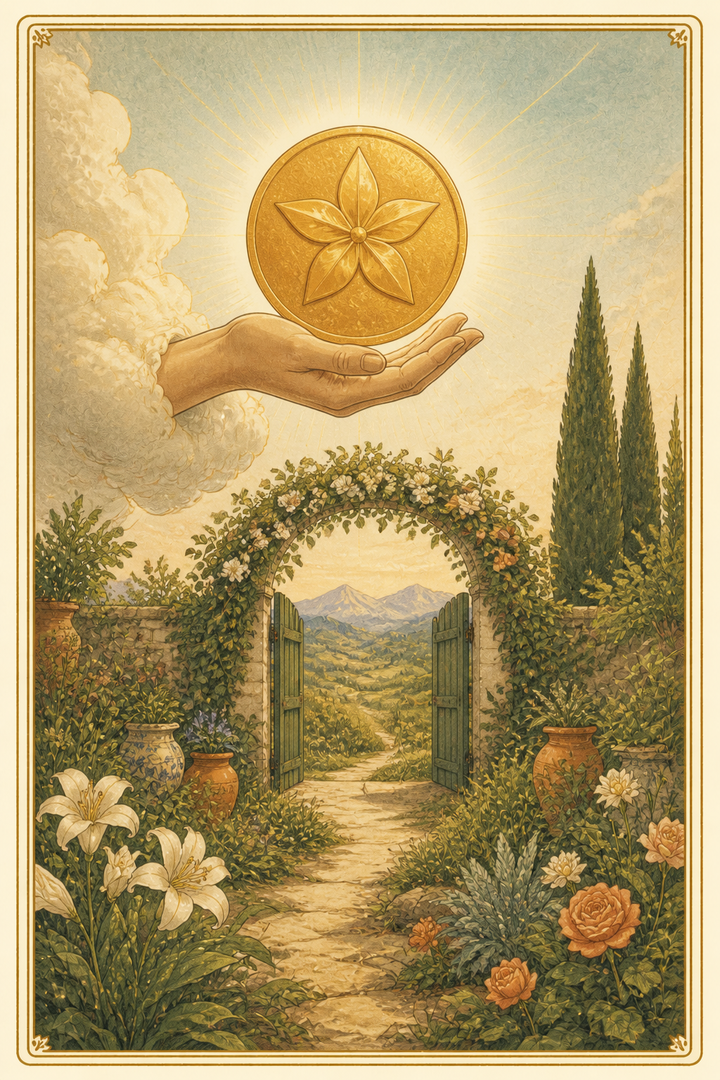
Ace of Pentacles
The same position in the suit's arc, worked out in earth instead of fire. Reading the four together is the fastest way to learn what the number itself means.
Same number, different element
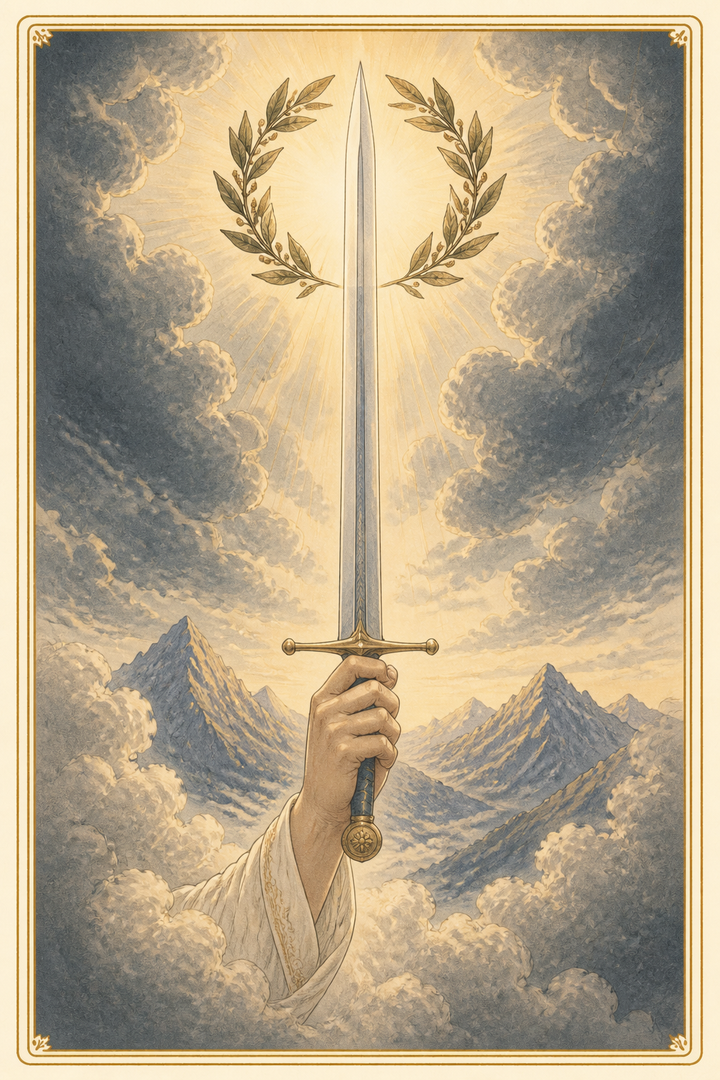
Ace of Swords
The same position in the suit's arc, worked out in air instead of fire. Reading the four together is the fastest way to learn what the number itself means.
The trump of the same number
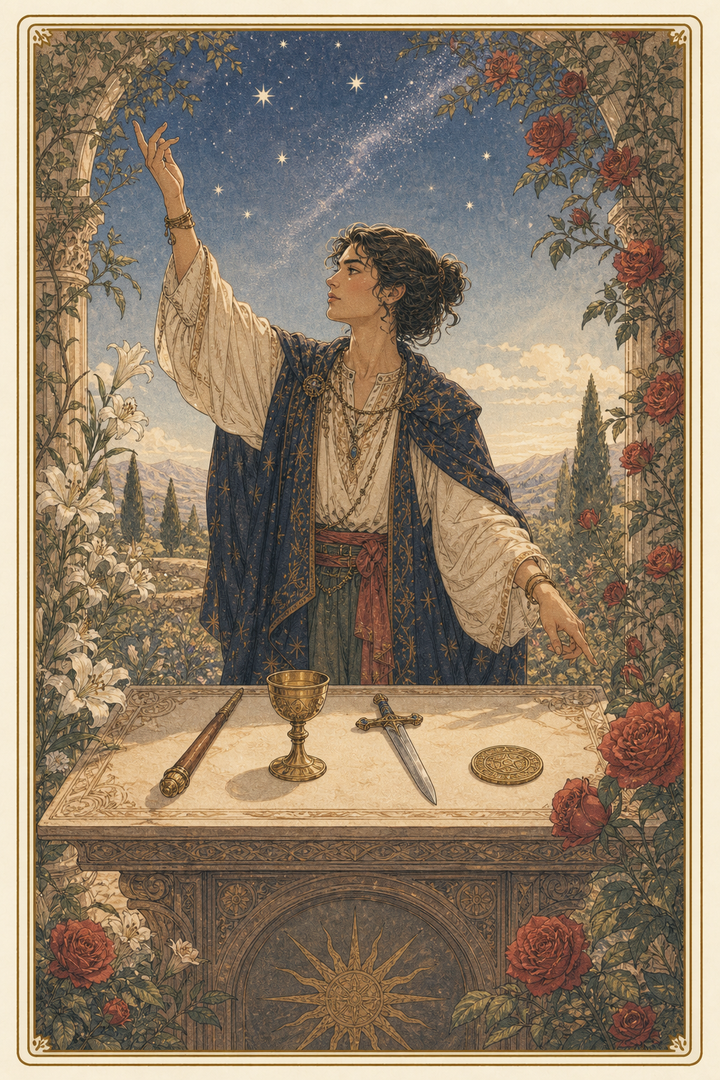
The Magician
The Magician is the same number raised to the level of a life theme. What the Ace of Wands does inside one situation, this card does to a whole chapter — the pip is the trump in ordinary clothes.